Tara Pattenden, Eephus & Sudo’s Funderdome
Metro Arts, September 2022
Exhibition essay by Alice Maia Rezende
For a gamer to be a theorist might not require the ability to play any particular game especially well. The prizes have nothing to do with thinking the game. Nor might gamer theory be the ability to dismiss the game as unreal in the name of some supposedly more solidly grounded outside. What? These luminous pixels are not real, you say? Then neither is your world.
— McKenzie Wark, Gamer Theory
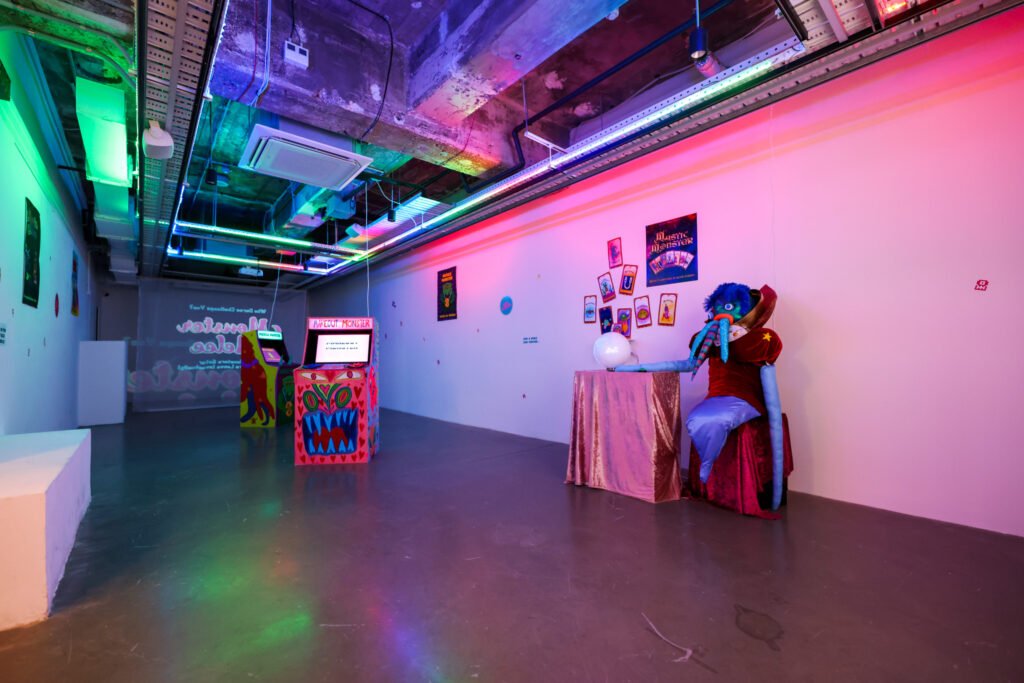
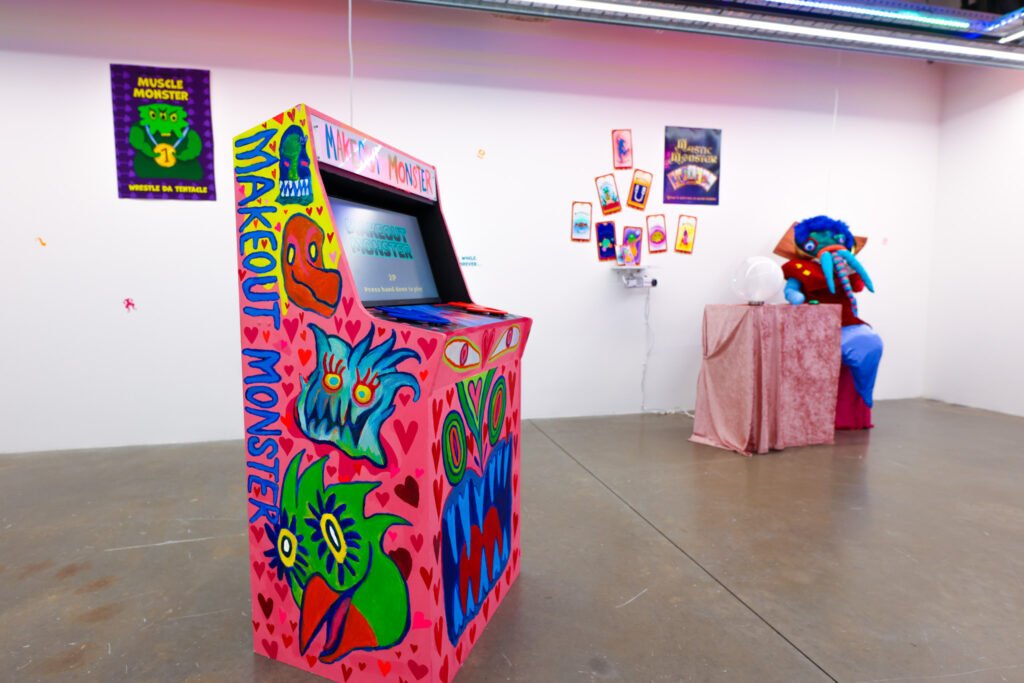
Tara Pattenden is an argonaut of virtual and Terran seas. Her first solo show in Brisbane, Eephus & Sudo’s Funderdome, is a full-stack entertainment arena of delightfully DIY proportions. Inspired by vintage gaming arcades, it invites human guests into an immersive fun funnel clearly designed in the image of monster-aliens. Yet no monster players abound, which may beg a series of questions: what made them leave, where did they go, and why are we taking their place?
Pattenden is a mean grrrl maker machine: her Chinatown studio has been configured into a series of modular homebases including a sewing station, a vinyl cutting corner, a computer lab, a noise pedal bunk, and even a 3D printing terminal. This does not diminish the importance of the high-tech: in fact, appropriating manufacturing channels and programming tools is as essential to Pattenden’s process as the handmade. For Funderdome, the artist produced a series of circuit boards for overseas manufacture, while her deep-seated love for the Javascript library p5.js. powered up the exhibition’s arcade games. By bringing together these two seemingly disparate worlds – the DIY and the industrial – Pattenden reconfigures them, releasing meaning out of their collision. As such, Pattenden realises McKenzie Wark’s characterisation of the figure of the ‘hacker’: “what the hacker calls into being in the world is a new world and a new being”.
Inside this world lies a thoughtful sensibility. Searching for forgotten modes of interaction beyond the epic quest of AAA games or the micro-transactions of throwaway titles, Pattenden’s games encourage exploration, bodily immersion, and a healthy sense of humour. Within this context, Eephus & Sudo’s alluringly strange monsters serve as motifs for user engagement, but also function as disarming symbols of something deeper and invite a critical gaze. Mark Fisher would put it this way: “The perspective of the eerie can give us access to the forces which govern mundane reality but which are ordinarily obscured, just as it can give us access to spaces beyond mundane reality altogether.”
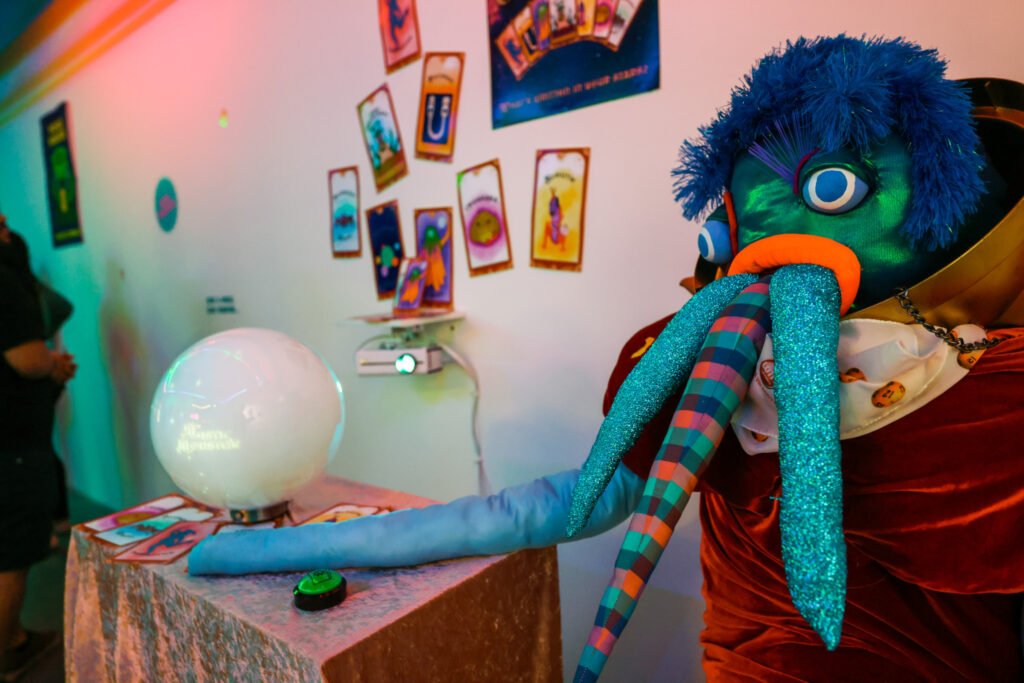
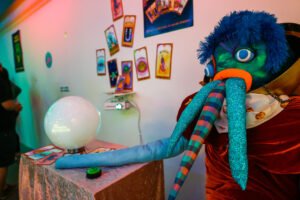
As Funderdome’s occult leader, Mystic Monster may perhaps be its weirdest character. Adorned with a scarf from a Finish lotto company and a tooth necklace from a dental shop in Rio – all mementos from Pattenden’s worldwide travels – Mystic draws tarot cards from the virtual ether. Yet the fortunes that her deck reveals defy interpretation. The nonsensical phrases that appear in her ‘crystal ball’ register somewhere between I Ching and fortune cookie platitudes: this is Pattenden’s playful swipe at the way that people will interpret and extract meaning from just about anything. For isn’t it wonderful to sometimes relinquish agency and allow the dark entities to decide our future? Ruled by algorithmic logic, Mystic Monster is a comment on the automated feeds of contemporary digital landscapes, where (carefully controlled) randomness takes over as a mode of cultural instruction.
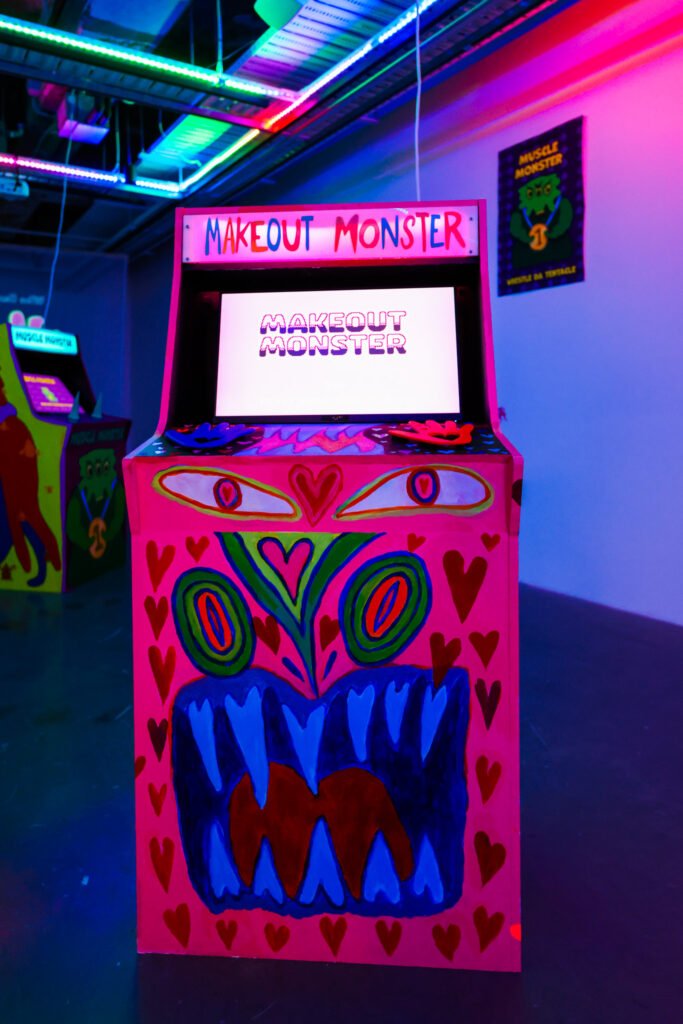
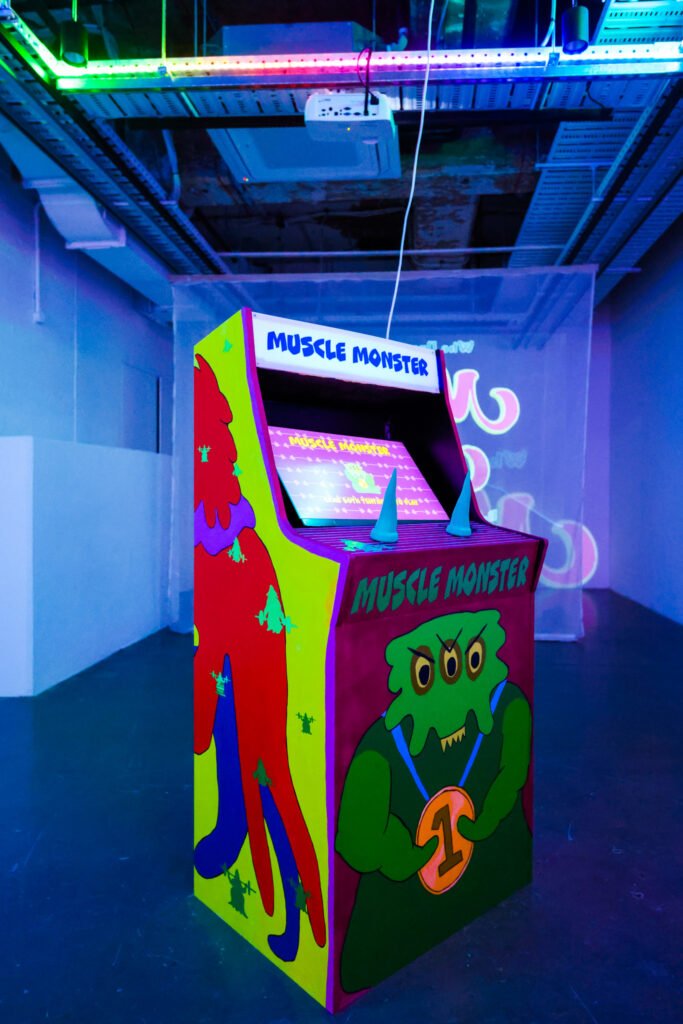
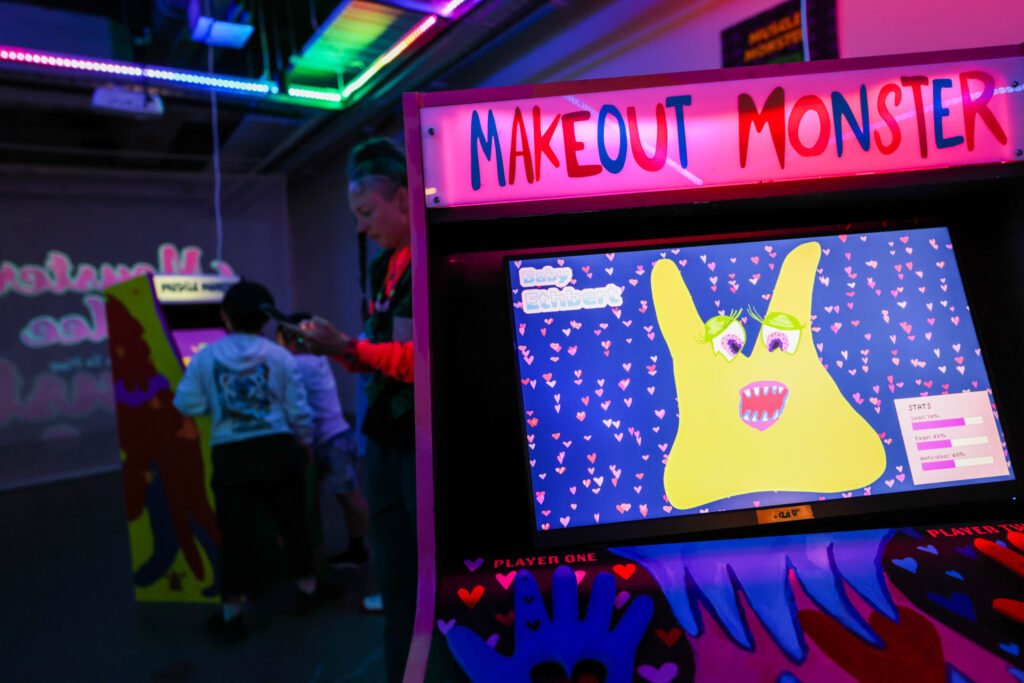
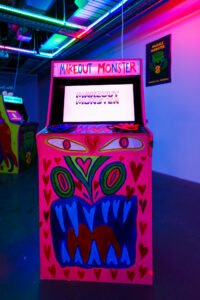
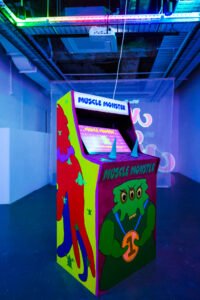
Designed in collaboration with artist David Spooner, the equally odd Makeout Monster is a two-player game that invites users to embark on the journey of a lifetime: baby-making. Inspired by cheap love and personality-testing machines, the game highlights the unceasing human preoccupation with controlling and shaping desire, and to seek that which affirms our own image. The twist in Makeout Monster, however, is the humorous grotesquerie of this mirrored image: cute and harmless, sure, but grotesque nonetheless. Muscle Monster, a strength-testing game, continues this act of reinterpretation, this time in dialogue with the arbitrary measures used by computer systems in an attempt to capture the human experience. And what better tool to measure strength than tentacles?
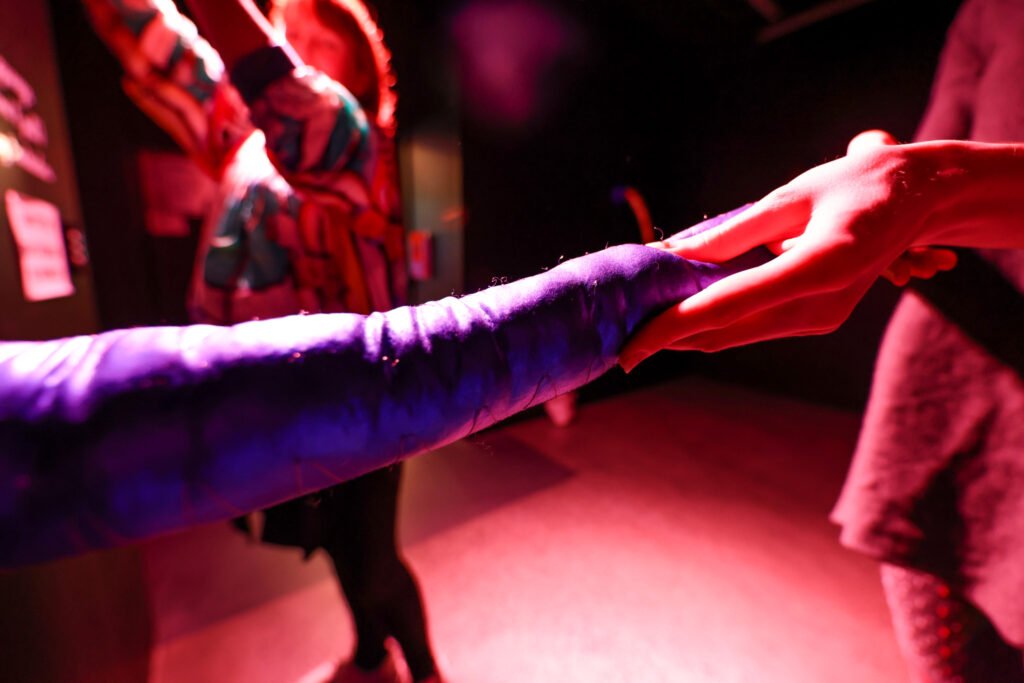
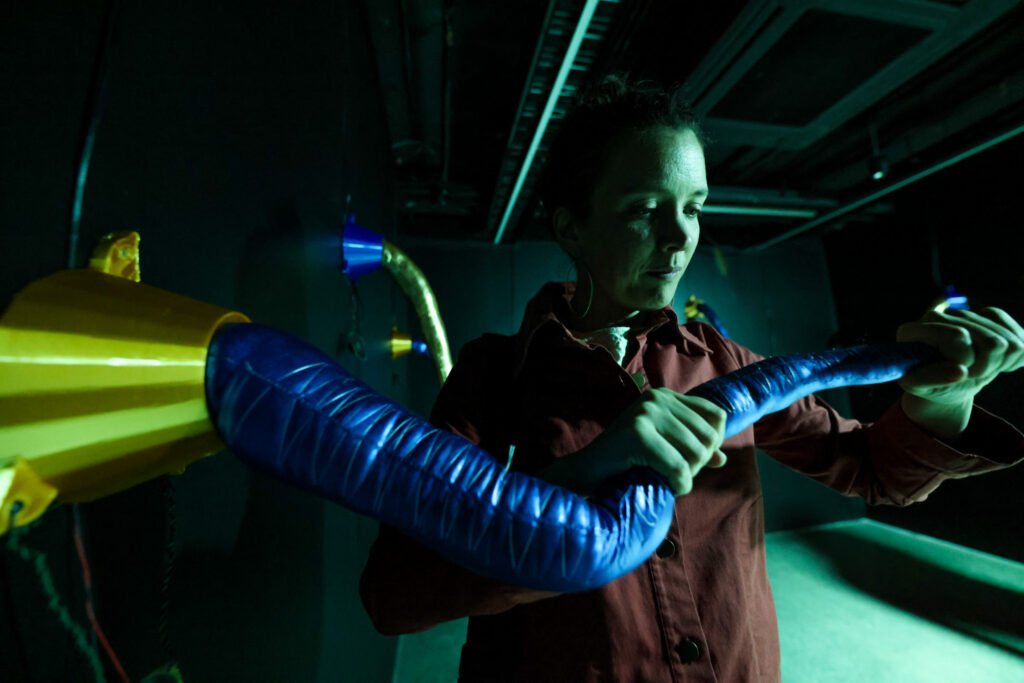
Pattenden admits to having worked with tentacles for years: “In terms of interaction, as a shape, they’re really good to grab. And they’re a bit rude.” Funderdome’s Cacophony Room features a whole swarm of them, reaching out from interdimensional depths. Eugene Thacker sheds light into this prevailing cultural mythos: “From medieval Icelandic fables of the Kraken, to Jules Verne’s 20,000 Leagues Under the Sea, tentacles envelop human beings in their unhuman embrace, the abyss of the unknown sea reaching up to the surface with a certain inevitability.” The Cacophony Room is Pattenden’s latest experiment with noise art in the form of electronic fabric instruments. Here, participants may choose to embrace these alien limbs and become conduits. Depending on the salt content of their fleshy, human bodies, octave shifters will pitch away in a disarrayed symphony, bringing the tentacle orchestra to life.
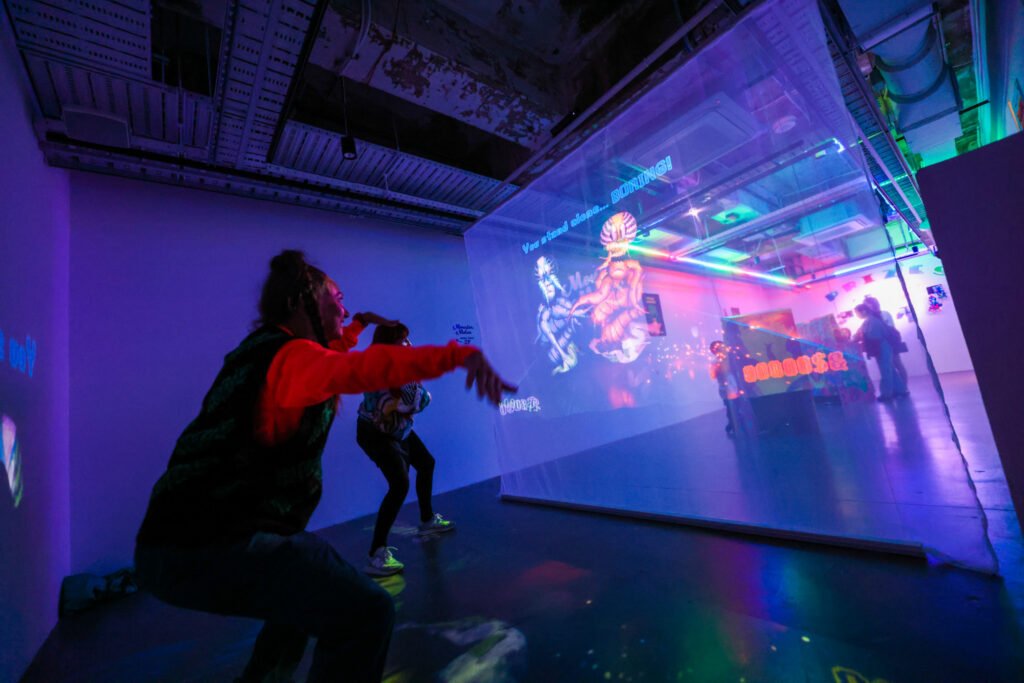
One may also choose to become a cephalopod. In Monster Melee, Pattenden and long-time collaborator Adam Raboczi endow users with their own set of virtual tentacles, offering them up for combative means. While the idea of a monster tussle may indicate that victory or defeat is inevitable, in Monster Melee the score is nonsensical, at least to a humanoid brain. This may bring about disorientation to the goal-oriented: for if a game exists where you can’t win, is it really a game? Glittery and ever-present, Funderdome’s unattainable prizes adorn the walls of the arcade. Like a fuzzy dream whose recall grows further out of reach, they delineate the limits of game-space, but refuse to disclose its rules and reasons.
Left unattended, Eephus and Sudo’s Funderdome could spawn something very dangerous: someone who plays games for play’s sake. A very dangerous thing indeed.
1 McKenzie Wark, A hacker manifesto (Cambridge: Harvard University Press, 2004),
2 Mark Fisher, The Weird and the Eerie (London: Watkins, 2017), 15.
3 Tara Pattenden, personal communication, August 19, 2022.
4 Eugene Thacker, Tentacles Longer Than Night (Zer0 Books, 2015), 247.
5 This may result in irreversible damage to the edges of the matrix. Don't say I didn't warn you.